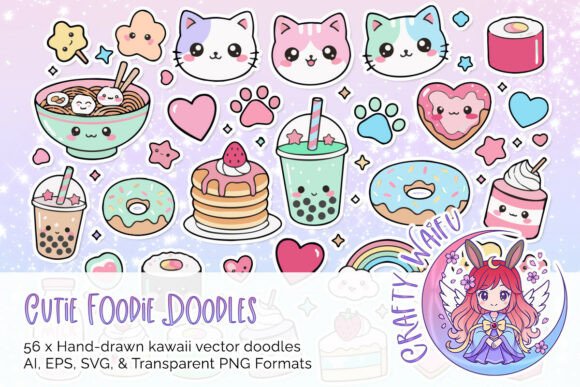
Cutie Foodie Doodles: A Designer’s Honest Review for Real Embroidery Use
First Impressions: Kawaii Charm Meets Practical Design
Opening the Cutie Foodie Doodles illustration pack feels like stepping into a pastel bakery full of smiling cupcakes and blushing buns. The Japanese kawaii influence is unmistakable — soft pinks, mint greens, and buttery yellows dominate the palette, and every food item has a tiny face that’s both expressive and just a little silly. The rounded shapes and gentle outlines give the designs a friendly, approachable feel that’s perfect for handmade goods targeting kids, foodies, or anyone who appreciates a bit of whimsy.
As a designer who regularly works with embroidery files for Etsy listings and boutique merchandise, I immediately thought of how these would stitch out on a custom tote or baby onesie. The key question: does the charm translate well to actual embroidery, or does it risk looking too cartoonish or overly busy once stitched?
Real-World Use: From Concept to Stitched Reality
I tested the sushi roll and cupcake designs on a cotton tote and a lightweight sweatshirt. The results were surprisingly clean. The soft outlines and minimal detail work held up well under satin and fill stitches, and the rounded corners didn’t snag or distort on the fabric. The facial expressions — those tiny eyes and blush marks — came through clearly without needing extra thread color changes.
- Custom apparel: Works great on hoodies and tees, especially for kids’ wear or boutique items targeting young adults.
- Baby embroidery: The gentle colors and playful expressions are perfect for baby bibs, burp cloths, or sleep sacks.
- Personalized gifts: These designs are ideal for adding a unique touch to mugs, aprons, or kitchen towels with a food theme.
- Commercial embroidery: A solid fit for boutique branding, especially for bakeries, cafes, or lifestyle brands with a kawaii aesthetic.
Where to Use with Care
Despite the charm, Cutie Foodie Doodles isn’t a one-size-fits-all design. I noticed a few potential issues when testing on tricky materials:
- Small hoop sizes: The more detailed pieces, like the ramen bowl, may not scale down well without losing facial features or clarity.
- Textured fabrics: Corduroy or thick knits can obscure the delicate outlines and soft shading.
- Dark fabric backgrounds: Some of the lighter pastel elements get lost unless you tweak the thread colors or add outlines.
- Stretchy fabric: The satin-stitched eyes and cheeks can pucker slightly if the stabilizer isn’t strong enough.
Also, if you’re stitching on curved surfaces like caps or around corners on tote bags, make sure to test the placement and adjust hoop alignment accordingly. These aren’t dense or overly complex designs, but they do rely on precision to keep that “derpy cute” charm intact.
Design Performance and Visual Impact
One of the biggest pluses of Cutie Foodie Doodles is how it enhances product value without overwhelming the item. A plain tote embroidered with a smiling donut instantly becomes a statement piece. For Etsy sellers or crafters, that’s huge — it means more engagement and higher perceived quality.
From a branding perspective, these illustrations can help establish a consistent visual identity, especially for small shops selling food-themed merchandise or seasonal items. The recognizable style makes for great repeat purchases and social media shareability. Customers remember a smiling slice of toast.
However, to keep the designs from looking too juvenile, it’s important to pair them with mature layouts. For example, a minimalist embroidered ramen bowl centered on a linen tea towel works better than scattering multiple doodles across a busy background.
Designer Notes: What to Watch for Before You Stitch
Here’s what I’d recommend to anyone considering using Cutie Foodie Doodles in real projects:
- Test on scrap fabric first, especially if you’re using textured or stretchy materials.
- Review stitch density; some of the fill areas may need slight adjustments for optimal coverage.
- Check thread color contrast; subtle pastel elements may need brighter accents to pop on darker fabrics.
- Confirm hoop size; don’t assume the file scales well without checking the original dimensions.
- Inspect small details; faces and eyes may need slight tweaking to stitch cleanly.
- Try black and white mockups; helps you see how outlines and structure hold up without color distractions.
- Use proper stabilizer; especially important for soft fabrics that can pucker easily.
- Confirm licensing; make sure the file allows for both personal and commercial use before selling finished items.
Final Thoughts: A Practical Pick for Playful Projects
Cutie Foodie Doodles won’t replace your go-to script fonts or classic monograms, but it fills a niche that’s growing fast — cute, approachable, and instantly recognizable embroidery designs for food lovers and kawaii fans. Whether you’re making custom sweatshirts for a boutique or designing a personalized gift for a friend, these illustrations bring a smile to both the maker and the recipient.
Just remember to treat them like any other design element: test, adjust, and pair thoughtfully. If you do, Cutie Foodie Doodles can be a fun and effective addition to your embroidery toolkit — especially when you want your finished product to feel handmade, heartfelt, and a little bit silly in the best way possible.